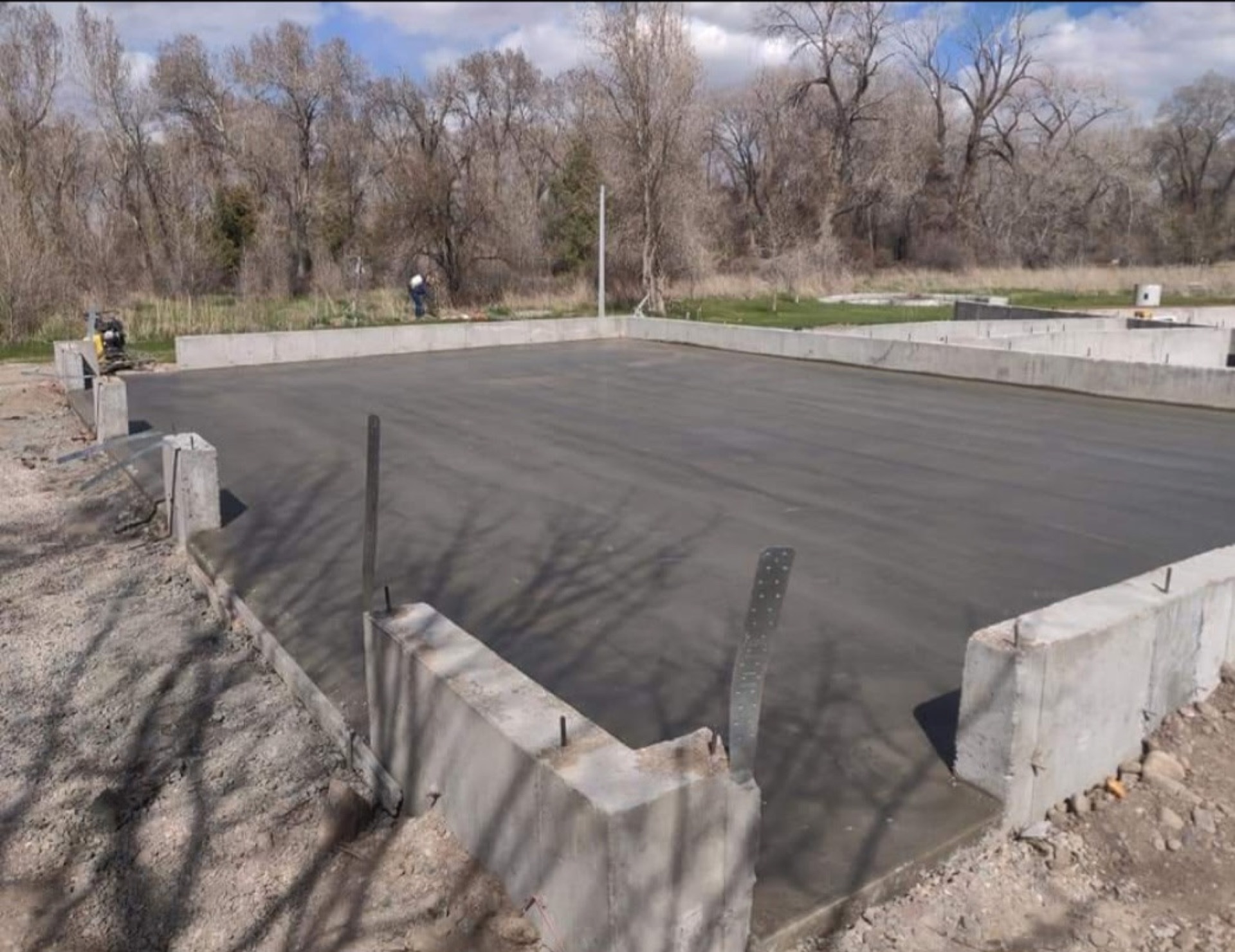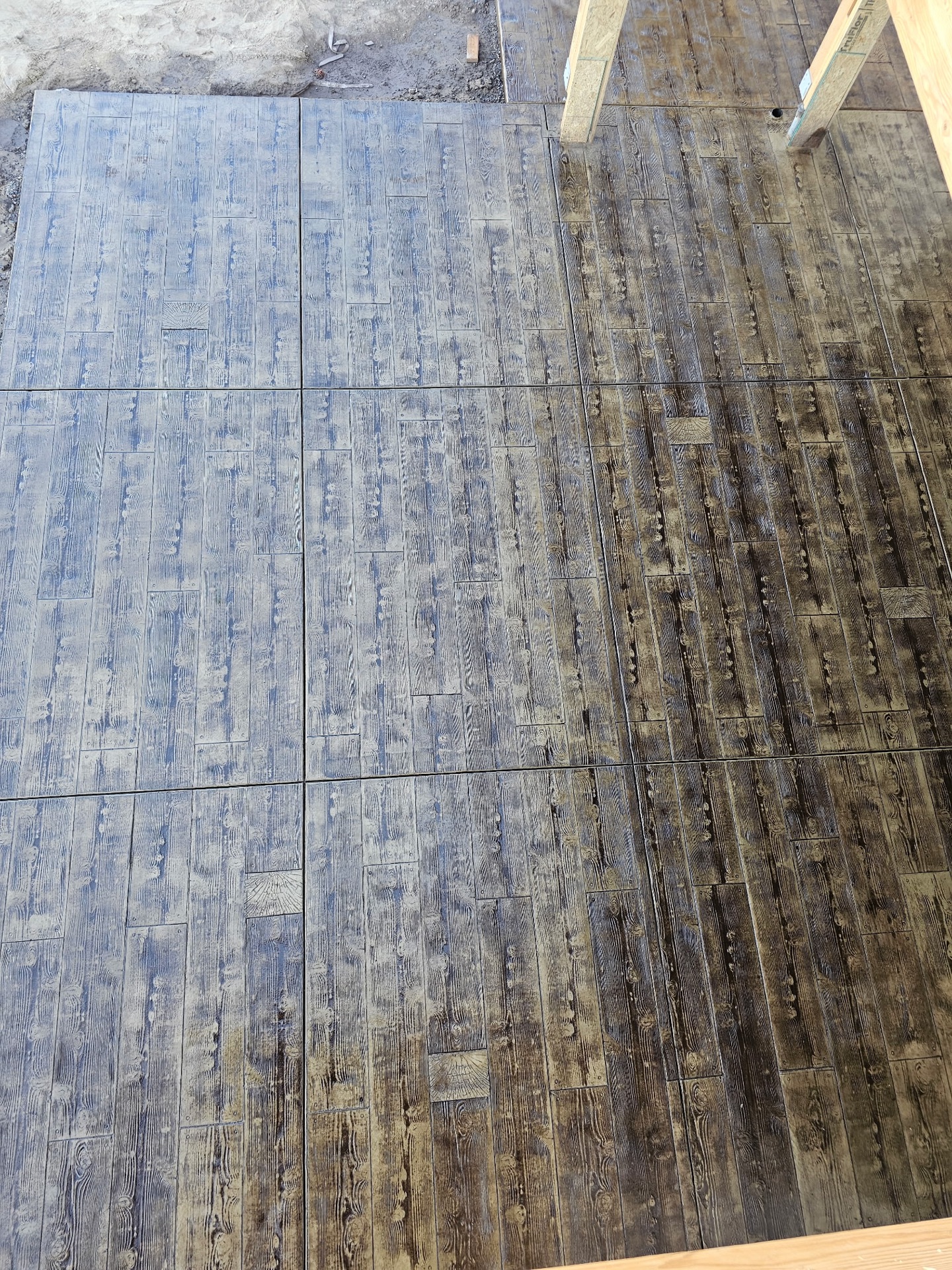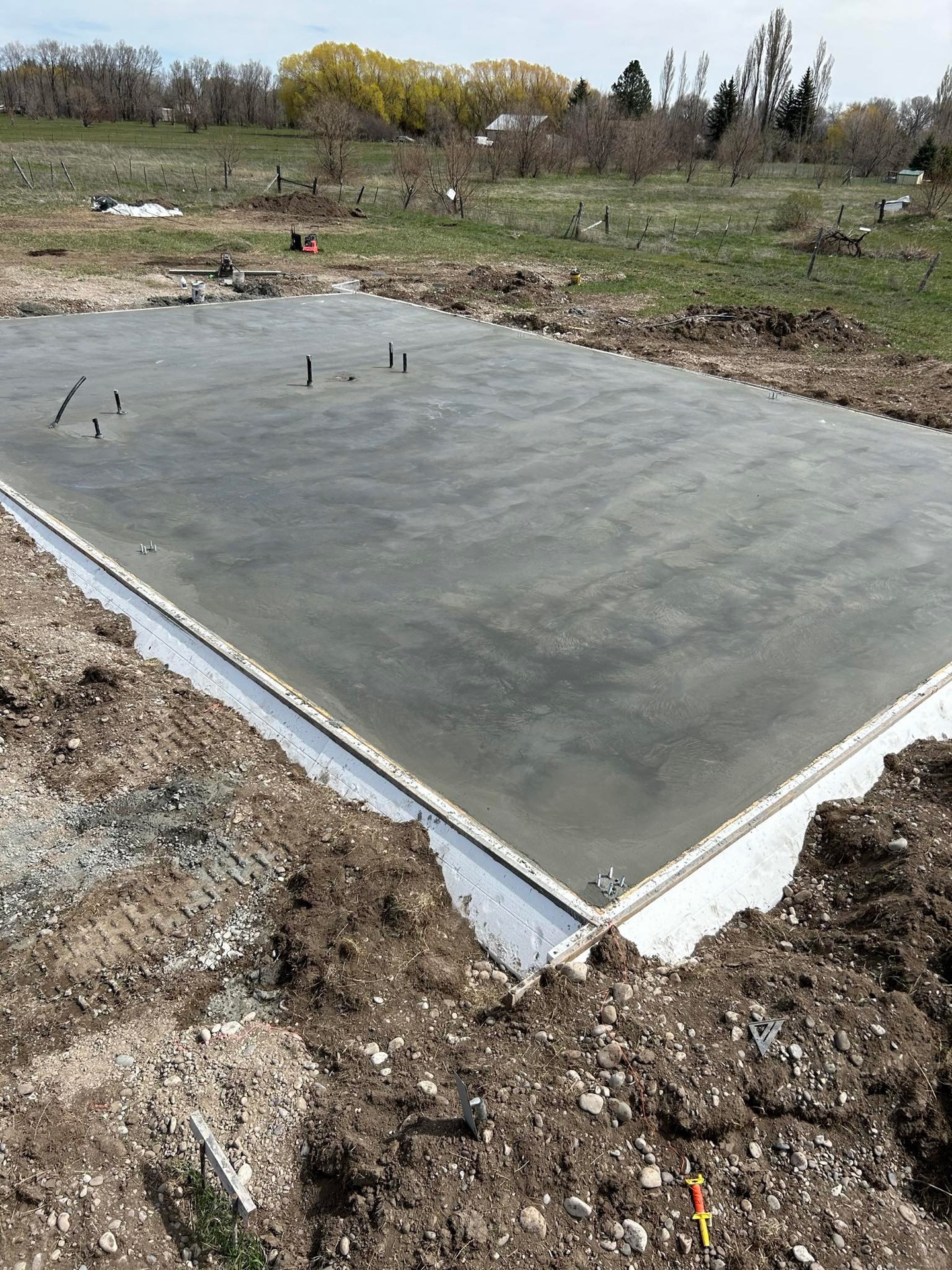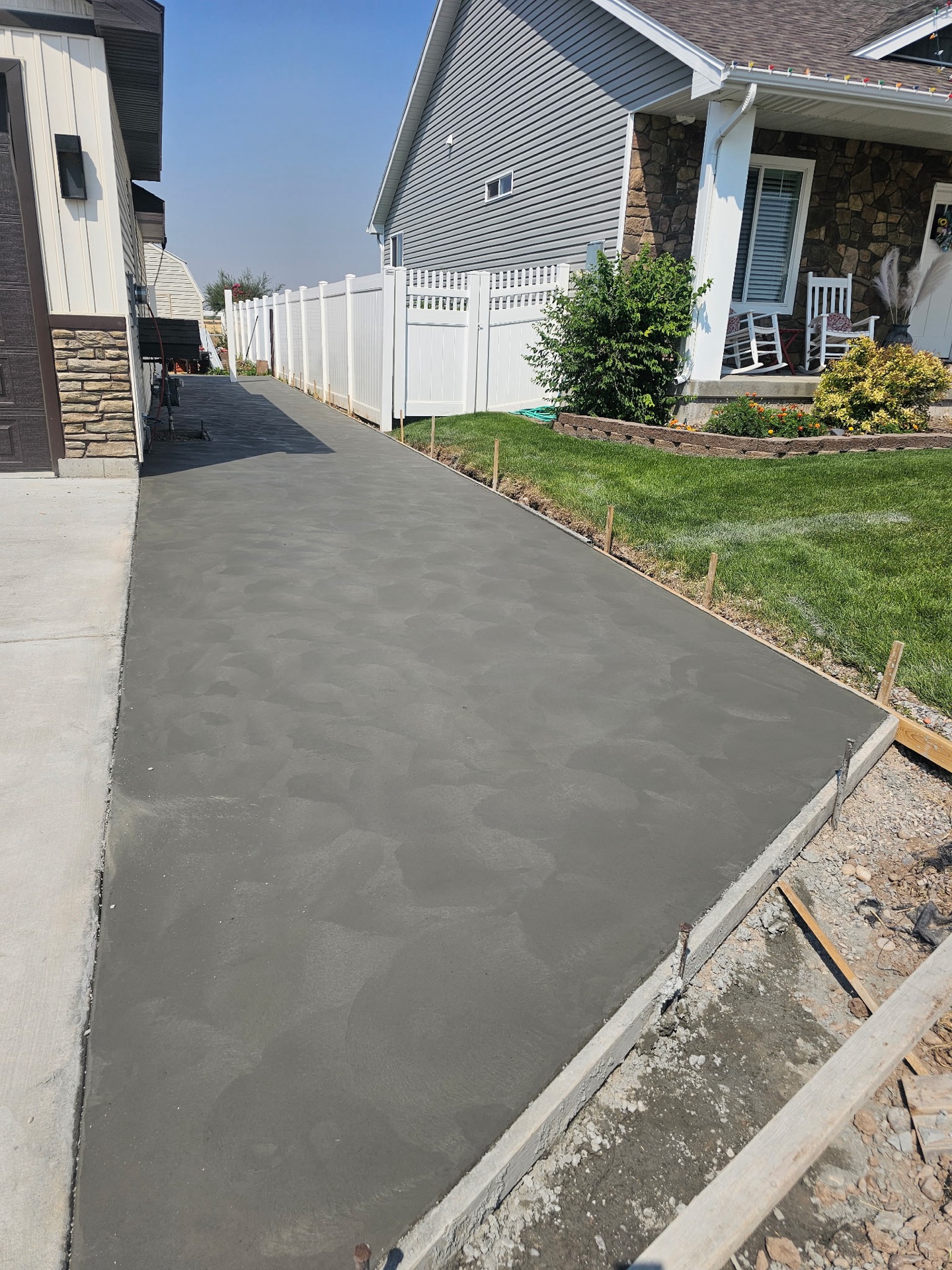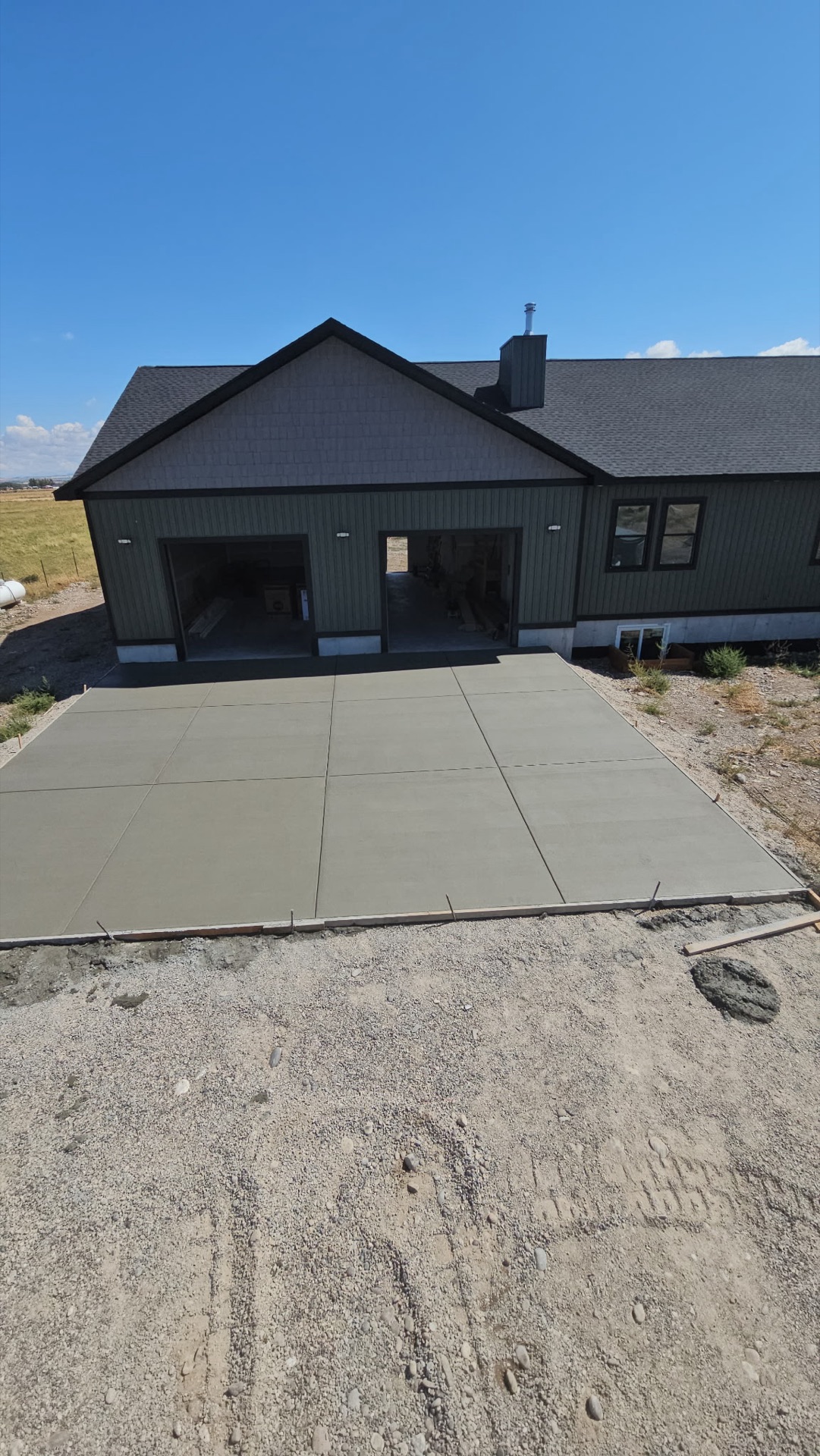
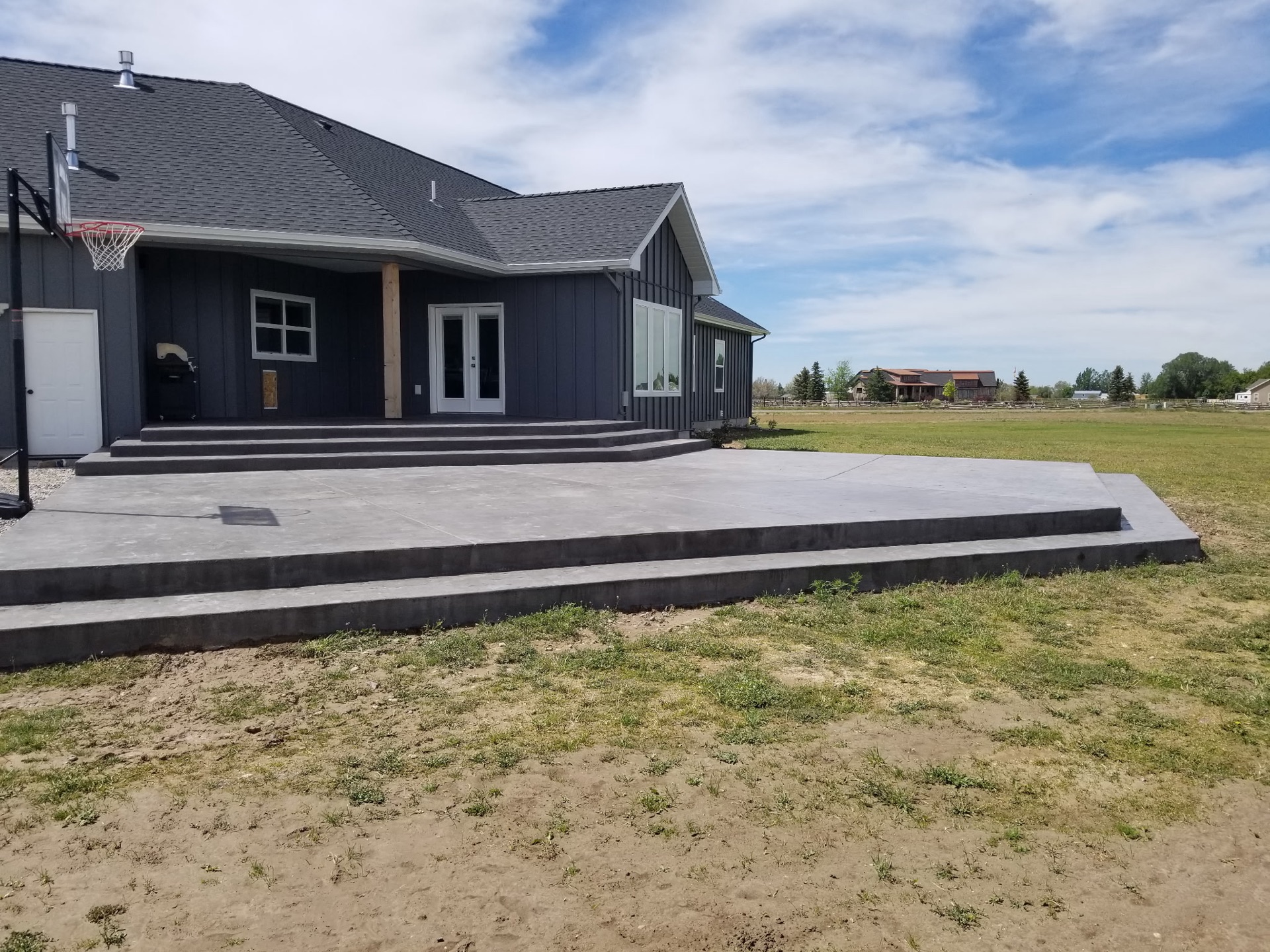
The call usually comes in March or April. The driveway looked great all fall. Then the snow melts and there are little craters scattered across it, some the size of a pencil eraser, a few as big as a quarter, each one with a broken piece of rock sitting at the bottom.
I run Skinner Customs out of Rigby, and that is a popout. It is one of the most common things people notice after their first Eastern Idaho winter on new concrete. Here is what causes it, when it matters, and what can be done about it.
What a popout actually is
The National Ready Mixed Concrete Association covers this in its bulletin CIP 40, Aggregate Popouts. Their definition:
“A popout is a small, generally cone-shaped, cavity in a horizontal concrete surface left after a near-surface aggregate particle has fractured due to localized internal pressure.”
NRMCA says the cavity can range from about a quarter inch to a few inches across, and part of the broken rock is often still stuck at the bottom. That piece of rock is the giveaway. Concrete is mostly rock held together by cement paste, and a popout happens when one of those rocks near the surface breaks apart and takes the paste on top of it along for the ride.
There is a cousin to the popout called a popoff. That is when the thin layer of mortar over a rock flakes off and leaves the rock exposed but unbroken. Different cause, similar look.
Why rocks pop: water and freezing
Most popouts in our part of the country are physical. Some gravel contains particles that are porous and lighter than the rest. They soak up water like a sponge. NRMCA explains what happens next:
“In winter, as this absorbed moisture freezes, it expands within the aggregate pores to create internal pressure that fractures the particle and the overlying concrete surface.”
That is why popouts are an outdoor, cold-climate problem. NRMCA notes they are typically seen on exterior flatwork in climates with freezing and thawing under moist conditions, and that they typically show up in the first year after placement. A driveway in Rigby or Rexburg sees snow, melt, refreeze and slush over and over from November to April. That is exactly the cycle that finds a weak rock.
NRMCA names low density chert as the most common culprit in natural aggregate deposits, and says it is generally not easy or cost effective to remove those particles from an aggregate source. Even the standard aggregate spec, ASTM C33, allows a small amount of these particles. In other words, a few popouts can happen on concrete that was ordered, poured and finished correctly.
The other kind: chemical popouts
Less common is a popout caused by a chemical reaction called alkali-silica reaction, or ASR. Certain types of silica in the aggregate react with alkalis in the concrete and form a gel that soaks up water and swells. NRMCA says these popouts are typically small, often with a discolored or damp-looking spot, and some can show up within a few days of the pour.
The difference matters. NRMCA says most popouts are cosmetic, but ASR popouts may point to a durability problem later on. If you are seeing small pits with dark, damp-looking spots on fairly new concrete, that is worth having someone look at.
Popoffs usually point to how the slab was finished
Popoffs are a different story. NRMCA says they are often the result of poorly installed concrete, from improper finishing or lack of curing. If water gets trapped above the rock or the paste never bonds well to it, freezing pops that thin layer loose. NRMCA adds that deicing salts can make mortar flaking worse.
So when I look at a pitted driveway, the first question is whether the rocks broke or the surface came off. Broken rock usually means aggregate. Flaking paste usually means workmanship, salt or both.
Are popouts a structural problem?
Usually not. NRMCA is direct about it:
“Most popouts are aesthetic defects that do not impact the structural performance or long-term service life of the concrete slabs.”
The catch is numbers. NRMCA goes on to say a large number of popouts make it easier for water and harmful chemicals to get into the concrete, which can lead to other kinds of damage. A dozen pits on a two-car driveway is cosmetic. A surface peppered with them is letting water in, and in our winters water in concrete is how small problems become big ones.
What actually reduces popouts
Nobody can promise zero popouts. NRMCA itself says the steps below reduce how often they happen but will not necessarily eliminate them. Here is what helps:
- A lower water to cement ratio. Less water in the mix means less room for water to reach the rock and a stronger, denser surface. This is one more reason I do not let a crew add water to the truck to make the pour easier.
- No water on the surface during finishing. NRMCA says not to add water to the surface while finishing and not to do final finishing while the concrete is still bleeding.
- No hard steel troweling on outdoor slabs. A slick troweled finish belongs inside. Outside, I broom finish.
- Proper curing. NRMCA says good curing improves strength, especially at the surface, and lowers how much water can move toward the rock.
- Sealing. NRMCA lists sealing the surface as an option. A good sealer keeps water out of the top of the slab.
- Smaller maximum rock size. NRMCA says smaller aggregate develops lower stress when it freezes, so fewer popouts form and the ones that do are smaller.
Two other options in the bulletin, a different aggregate source or a two-layer pour with popout-free rock on top, are real but NRMCA calls the two-layer option typically expensive for most work.
A lot of this overlaps with the basics I push on every pour: 4,000 PSI minimum concrete for our freeze-thaw cycles, a broom finish outside, no extra water, and curing done right after the truck leaves.
How popouts get repaired
NRMCA recommends figuring out the cause before planning a repair. For a serious case, that can mean pulling a core sample and having a petrographer look at it, which is how you tell an aggregate problem from an ASR problem.
For ordinary physical popouts, NRMCA describes the repair this way: chip out what is left of the broken rock, clean the hole, and fill it with a repair material such as dry pack mortar or epoxy mortar following the manufacturer’s directions. They also warn it will be difficult to match the color of the existing concrete, so patched spots will usually show.
If there are too many popouts to patch one at a time, NRMCA says a thin bonded overlay can restore a uniform surface. At that point it is worth comparing that against other options for the slab.
What I tell homeowners
If you have a handful of popouts on a one-year-old driveway, take a breath. It is common in a freeze-thaw climate, it is usually cosmetic, and it often slows down after the first couple of winters. Keep it sealed, go easy on harsh deicers, and keep an eye on it.
If the surface is flaking off rather than rocks breaking, or the pits come with damp, discolored spots, or the number keeps climbing every spring, get someone out to look at it before it turns into scaling or bigger damage.
Frequently Asked Questions
What causes popouts in concrete?
Most popouts happen when a porous rock near the surface soaks up water, the water freezes and expands, and the rock fractures and breaks off the concrete above it. A less common type comes from a chemical reaction called alkali-silica reaction.
Are concrete popouts covered as a defect?
That depends on your contract. NRMCA notes that the aggregate spec, ASTM C33, permits some quantity of particles that can cause popouts, and that a few can occur even on properly built concrete. Popoffs from poor finishing or curing are a different matter.
Do popouts mean my driveway is failing?
Usually not. NRMCA says most popouts are cosmetic and do not affect the structure or service life of the slab. A large number of them can let water in and lead to other damage, so watch for them spreading.
When do popouts show up?
Freeze-thaw popouts typically appear during the first year after the concrete is placed, often noticed in spring after the first winter. Chemical popouts can show up within a few days of the pour.
Can popouts be prevented?
They can be reduced. A lower water to cement ratio, no added water during finishing, a broom finish outside, proper curing, sealing and smaller rock size all help. NRMCA says these steps reduce popouts but will not necessarily eliminate them.
How do you fix a popout?
Chip out the rest of the broken rock, clean the cavity and fill it with a repair mortar made for the job. Expect the patch to be a slightly different color. If there are too many to patch, a thin bonded overlay is an option.
Seeing pits in your concrete?
If you are in Rigby, Idaho Falls, Rexburg, Ammon or Shelley and your driveway or patio came out of winter with craters in it, send me a few photos. I will tell you straight whether it is cosmetic or something to deal with.
Need concrete work in Eastern Idaho? Call Zach at Skinner Customs at (208) 390-5794 or start at skinner-customs.com.
Content produced in partnership with S4 Media, marketing partner of SwagerBuilds LLC.