
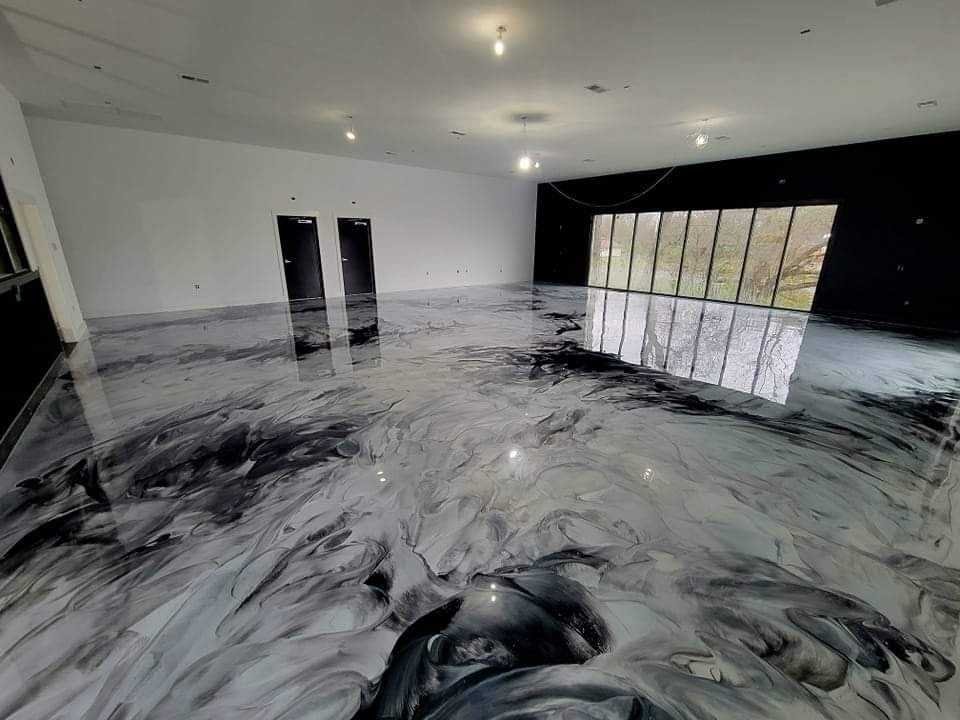
Yes, you can install an epoxy or flake garage floor in winter in Eastern Idaho. What matters is the right product and a warm slab, because cold concrete, not cold air, is what ruins a winter install. Standard epoxy needs the slab at roughly 55°F or warmer, and it has to stay warm through the cure. Polyaspartic systems are built to cure on colder concrete. In an attached garage that is heated before, during and after the install, winter works fine for a garage floor.
Skinner Customs installs garage, shop and basement floor coatings all winter across Idaho Falls, Rexburg, Rigby, Ammon, Pocatello, Blackfoot, Driggs, Victor and Jackson, and we heat the garage before, during and after the install. This is how a cold-weather install works and what to plan for.
The number that matters is slab temperature
Air temperature is easy to fix. Turn on a heater and the garage is 60°F in a couple of hours. The concrete lags far behind. A slab on grade in January can sit in the 30s or low 40s even when the air above it feels comfortable, and the coating reacts at the temperature of the concrete it is touching.
Most coating manufacturers spell out three checks on their data sheets:
- Slab temperature. Standard 100% solids epoxy generally needs the slab at 55°F or above. Below about 50°F, many epoxies cure slowly, cure soft or stop curing. Cold-cure epoxies and polyaspartics are rated lower, and some polyaspartic and polyurea products go down on slabs in the 30s.
- Dew point. The slab should stay at least 5°F above the dew point through the cure. If it does not, moisture condenses on the surface and the coating will not bond or will cloud.
- Staying warm. The slab has to hold that temperature through the first day or more of cure, not just during application.
That is why a winter install starts with an infrared thermometer pointed at the floor, not at the thermostat. For the same reason on the pouring side, see cold weather concrete curing in Idaho.
How a winter install actually works
- Check the slab ahead of time. Slab temperature, moisture and the forecast for install week.
- Heat the garage 24 to 48 hours before. Long enough for the concrete itself to warm up. Uninsulated or detached buildings can take longer.
- Close up the drafts. Door seals, gaps and open vents get covered so the heat stays in.
- Grind, repair and clean. In winter this includes getting every trace of salt residue out of the slab. Salt left in the pores is a common reason coatings lift.
- Apply the system. Base coat, full flake broadcast, scrape, topcoat.
- Keep the heat on through the cure. At least a full day after the last coat, longer for epoxy in a cold building.
- Wait before parking. On our floors, plan on 2 to 3 days with the heat kept on through the cure.
One thing to avoid: open-flame and unvented propane or kerosene heaters. They put moisture and combustion gases into the air, which can leave a cloudy, greasy film on curing epoxy called amine blush, and they are not safe to run in a closed garage. Indirect-fired or electric heaters are the right tools.
Which coatings work in the cold
| System | Typical minimum slab temperature | Winter notes |
|---|---|---|
| Standard 100% solids epoxy | About 55°F | Needs a well-heated garage before and after. Longest cure in the cold. |
| Cold-cure epoxy | About 45°F | Formulated to react at lower temperatures, with a shorter working time. |
| Polyaspartic | Often about 35°F to 40°F | Cures fast even when cool. A strong winter choice. |
| Polyurea | Some products lower still | Very fast cure. Product-specific limits. |
These are typical ranges. The product data sheet for the exact coating being used is what governs.
A full-flake floor with an epoxy base and polyaspartic topcoat is only as cold-tolerant as its epoxy base. If your garage is hard to heat, a full polyaspartic system is usually the better winter pick. We compared the systems side by side in Flake vs. Solid Epoxy vs. Polyaspartic.
Attached garages vs. detached shops
Attached garages pick up heat from the house and usually run noticeably warmer than outside, so they are the easiest winter installs. A detached garage, pole barn or shop with no insulation in the slab or walls is a different job. It takes longer to bring the concrete up to temperature and more heat to hold it there, and on the coldest stretches of January it can make sense to wait for a milder week.
How long before you can park on it?
On floors we install, plan on 2 to 3 days before you park, with the garage kept heated through the cure. You can walk on it sooner. A very cold detached building can stretch that a little, and we will give you the exact time for your floor before we start.
Plan the install around the forecast too. Parking on a fresh floor with tires full of snow and de-icer is the last thing you want in the first week.
Why winter is a good time to do it
- Outdoor concrete slows down. Driveways and patios do not get poured in January, which is why interior coatings are a natural winter project.
- The sooner it is down, the less salt the bare slab takes. Every storm that soaks salty meltwater into bare concrete adds to the pitting near the door.
- It is done before spring. When the garage door is open again in April, the floor is already finished.
Frequently asked questions
What is the coldest temperature you can install epoxy?
For standard epoxy, the slab should be about 55°F or warmer and stay above about 50°F through the cure. Polyaspartic and some polyurea products are rated for colder slabs. Always go by the data sheet for the specific product.
Can I park in the garage while the floor cures?
No. The floor needs to be completely clear from prep through cure, and vehicles stay out until the installer says the floor is ready.
Do I need to empty the whole garage?
Yes. The whole floor gets ground and coated, so everything sitting on it has to come out, including shelving that sits on the slab.
Can you coat a garage floor that has salt stains and pitting?
Yes. Salt residue gets cleaned and ground out, and pits and spalls get filled and ground flat before the coating goes down. Most garage floors in this area have some of that by the time they get coated.
Will the heat make my garage smell?
Some coatings have an odor during application and early cure. Polyaspartic and solvent-based products are stronger than water-based ones. Ask your installer which product they are using and how long to keep the door to the house closed.
Planning a winter garage floor?
Send a few photos of the floor, the garage size, whether the garage is attached and heated, and when you need to be parking on it again. We will tell you which system fits a winter install in your garage and what it costs. Prices start at $6 per square foot; see the garage floor coating cost guide for full numbers.
Need a garage floor coating in Eastern Idaho? Call Zach at Skinner Customs at (208) 390-5794 or start at skinner-customs.com.
Content produced in partnership with S4 Media, marketing partner of SwagerBuilds LLC.
Leave a Reply