For most garages in Eastern Idaho, the best floor is a full-flake system with a polyaspartic topcoat. The flake hides snowmelt residue and grit, the texture gives you grip on a wet floor, and a polyaspartic topcoat handles road salt, sun and hot tires better than an epoxy topcoat does. Solid-color epoxy still makes sense in a basement or a shop that never sees salt or sun. A full polyaspartic system is the upgrade if you want the fastest cure or need to install in a cold garage.
Skinner Customs installs all three across Eastern Idaho, from Idaho Falls, Rexburg, Rigby, Ammon, Pocatello and Blackfoot to Driggs, Victor and Jackson. Here is how they compare when winter is the real test.
What each system actually is
Solid-color epoxy. A pigmented epoxy base coat rolled onto a ground slab, usually followed by a clear topcoat. Professional systems use 100% solids epoxy, which goes on much thicker than the water-based epoxy in hardware-store kits.
Full-flake floor. A base coat goes down, then colored vinyl flakes are thrown onto the wet base until no base coat shows. That is called broadcasting to refusal. Once it cures, the loose flake is scraped and swept off and a clear topcoat locks it in. The base can be epoxy or polyaspartic. The topcoat is what you actually walk and drive on.
Polyaspartic. A fast-curing coating in the polyurea family. It can be used as just the topcoat over an epoxy base, or for every layer. It cures in hours rather than a day or more, it does not yellow in sunlight, and many products are rated to go down on a colder slab than standard epoxy.
How winter tests a garage floor
- Salt and de-icer. Snow packed on your truck melts on the floor and leaves a salt film every time it dries.
- Standing water. Meltwater pools in low spots and along the edges for days.
- Freeze-thaw at the door. The first few feet inside the door freeze and thaw every time the door opens.
- Grit. Sand and gravel off the roads grind into the surface under your tires and boots.
- Temperature swings. The slab expands and contracts as the garage swings between freezing and warm.
- Summer payback. Then July brings hot tires and afternoon sun through the open door.
A floor that holds up here has to handle all of that, not just look good on install day.
Head-to-head comparison
| Solid-color epoxy | Full flake (epoxy base, polyaspartic top) | Full polyaspartic flake | |
|---|---|---|---|
| Road salt and de-icer | Fair. Can dull and etch with long exposure | Good | Very good |
| Sun and yellowing | Epoxy yellows in direct sun | Good. Topcoat is UV-stable | Very good |
| Hot tire pickup | A risk, especially with thin coats | Low | Low |
| Grip when wet | Slick unless grit is added | Good. Flake adds texture | Good |
| Hides dirt, salt film and stains | Poor | Very good | Very good |
| Movement with temperature swings | Rigid | Moderate | More flexible |
| Cold-weather install | Needs a warm slab, about 55°F or more | Limited by the epoxy base | Many products rated for colder slabs |
| Installed cost at Skinner Customs | From $6 per sq ft | From $6 per sq ft | From $8 per sq ft |
Whichever system you pick, plan on 2 to 3 days before you park on a new floor from us. Pricing is covered in more detail in our Garage Floor Coating Cost in Idaho Falls guide.
The topcoat is the layer that matters most
Most of what people like or hate about a garage floor comes down to the topcoat. It is the layer that takes the salt, the tires and the sun. An epoxy topcoat is cheaper, but it is softer, it ambers in UV and it is the layer most likely to lift under a hot tire. A polyaspartic or urethane topcoat is harder, stays clear in the sun and shrugs off salt. If you only upgrade one thing on a bid, upgrade the topcoat.
Which system fits which space
Daily-driver garage, door faces south or west. Full flake with a polyaspartic topcoat, or full polyaspartic. Sun and salt are both in play, so the topcoat has to handle both.
Daily-driver garage, door faces north or east. Full flake with a polyaspartic topcoat is still the safe pick. Salt is the bigger enemy here than sun.
Shop with jacks, jack stands and dropped tools. A thicker 100% solids epoxy base for impact strength, full flake, and a polyaspartic topcoat for chemical and salt resistance.
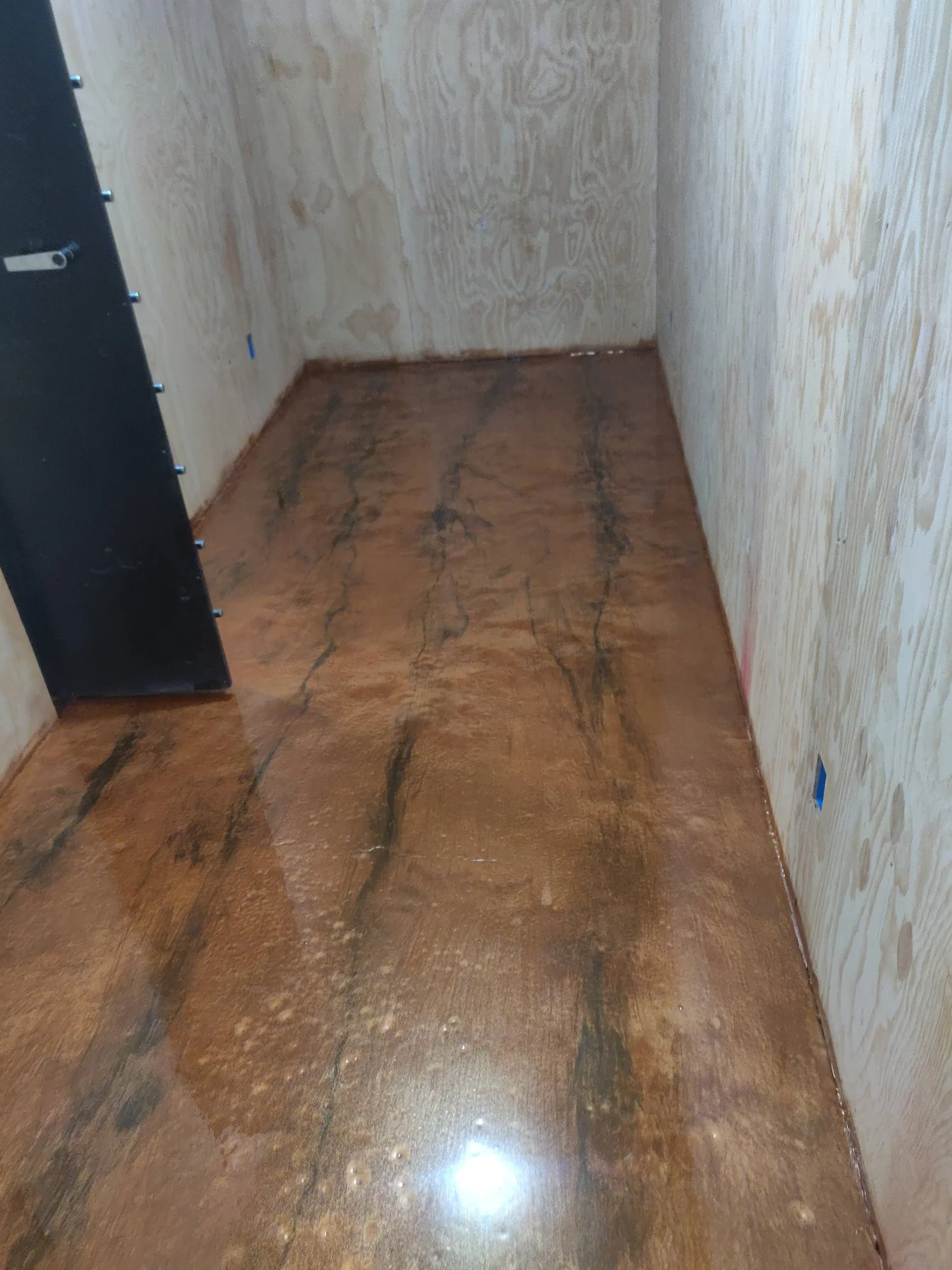
Basement or finished room. Solid-color, flake or a decorative metallic epoxy all work, since there is no salt and little sun. Test for moisture first. Below-grade slabs can push vapor up and blister a coating that was not built for it.
Mudroom or entry off the garage. Flake, for the grip and because it hides the dirt that comes in on boots all winter.
Picking a flake color for an Idaho garage
Mid-tone blends of grey, tan and black hide road grime and salt film best. Very dark solid floors show every white salt mark. Very light floors show every tire track. If you want the floor to look clean between washes in February, pick a blend with some light and some dark flake in it.
Frequently asked questions
Is a flake epoxy floor slippery when wet?
Less than a solid floor, because the flake adds texture. If the garage sees a lot of meltwater, ask for an anti-slip additive in the topcoat.
Does road salt ruin epoxy garage floors?
Salt sitting on an epoxy topcoat for long periods can dull and etch it. A polyaspartic or urethane topcoat resists salt much better. Either way, rinsing the salt film off a few times a winter keeps the floor looking new.
Can you put polyaspartic over an existing epoxy floor?
Often, yes, if the old epoxy is still well bonded. It gets sanded or ground so the new coat can bond. Anything peeling has to come off first.
What is the difference between polyurea and polyaspartic?
Polyaspartic is a type of polyurea that reacts more slowly, which gives the crew time to apply it evenly. In garage floor talk the two names get used almost interchangeably.
How do I clean a flake garage floor in winter?
Squeegee standing meltwater out the door, then rinse with water and a mild cleaner every few weeks to lift salt film. Skip acidic cleaners and harsh solvents.
Not sure which system fits your garage?
Send a few photos of the floor, the garage size and which way the door faces, and tell us how you use the space. We will tell you which system fits and what it costs before anyone grinds anything.
Need a garage floor coating in Eastern Idaho? Call Zach at Skinner Customs at (208) 390-5794 or start at skinner-customs.com.
Content produced in partnership with S4 Media, marketing partner of SwagerBuilds LLC.
Leave a Reply